A bridge is a structure built to span physical obstacles such as a body of water, valley, or road, and it typically consists of several key components. Here are the main components of a bridge:
1. Deck
- Description: The surface of the bridge that carries the traffic (vehicles, pedestrians, trains, etc.). The deck is usually made of concrete, steel, or wood.
- Function: Provides a stable surface for the movement of traffic.
2. Superstructure
- Description: The part of the bridge that supports the deck and includes components like girders, beams, trusses, or arches.
- Function: Transfers the load from the deck to the substructure.
3. Substructure
- Description: The part of the bridge that supports the superstructure and transfers loads to the foundation.
- Components:
- Piers: Vertical supports between the ends of a bridge span.
- Abutments: Structures at the ends of the bridge that support the deck and connect it to the ground.
- Function: Provides stability to the bridge by anchoring it to the ground.
4. Foundation
- Description: The base of the bridge that is anchored deep into the ground to support the entire structure.
- Types:
- Shallow Foundations: Used when the soil near the surface is strong enough to support the bridge.
- Deep Foundations (Piles): Used when the surface soil is weak, requiring deeper anchorage.
- Function: Transfers the loads from the bridge to the ground.
5. Bearings
- Description: Devices placed between the superstructure and the substructure.
- Types: Elastomeric, sliding, or roller bearings.
- Function: Allow controlled movement of the bridge (due to expansion, contraction, or loads) while reducing stresses on the bridge components.
6. Expansion Joints
- Description: Gaps placed in the bridge deck to allow for thermal expansion and contraction.
- Function: Prevents damage to the bridge due to temperature changes or other movements.
7. Parapets/Railings
- Description: Safety barriers installed along the edges of the bridge deck.
- Function: Protects vehicles and pedestrians from falling off the bridge.
8. Approach Slab
- Description: The transition section between the roadway and the bridge deck.
- Function: Provides a smooth transition onto the bridge and reduces settlement problems at the ends of the bridge.
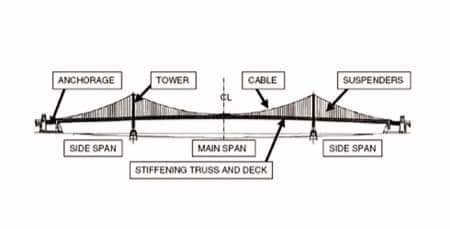
9. Cables (in cable-stayed or suspension bridges)
- Description: High-strength steel cables used to support the deck in cable-stayed or suspension bridges.
- Function: Distribute the weight of the deck and transfer it to the towers or pylons.
10. Towers or Pylons (in cable-stayed or suspension bridges)
- Description: Tall vertical structures that support the cables in cable-stayed or suspension bridges.
- Function: Provide height and support to the cables, allowing the bridge to span large distances.
These components work together to ensure the bridge is stable, durable, and safe for use.
 Diamond Thoughts
Leave a comment